
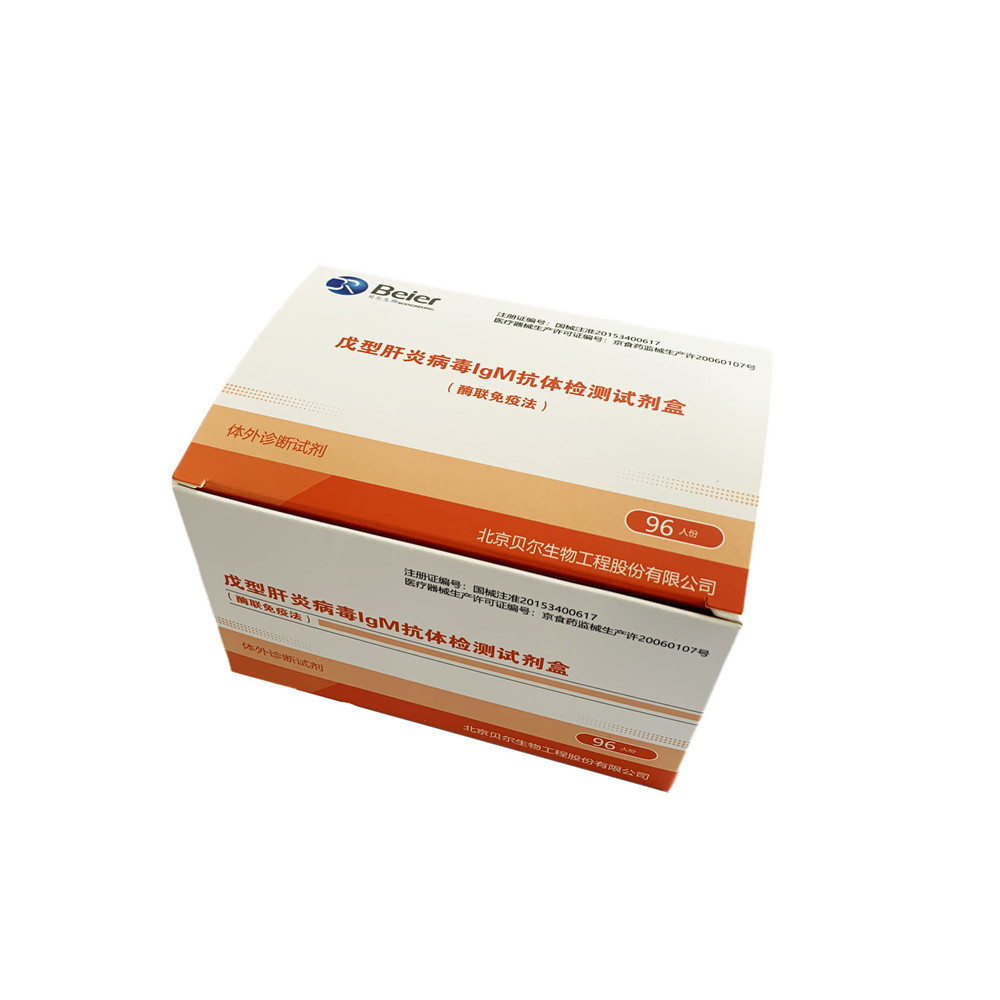
Established in Beijing in September 1995, Beijing Beier Bioengineering Co., Ltd. has quickly established itself as a leading high-tech enterprise in China specializing in the development and production of in vitro diagnostic reagents. The company's commitment to innovation and cutting-edge research has positioned it as a key player in the global healthcare industry.
Conformation Dependent Immunoassay, or CDI, is a proprietary technology developed by Beijing Beier Bioengineering Co., Ltd. that utilizes conformation-specific antibodies to detect the presence of specific biomarkers with unparalleled precision. Unlike traditional immunoassays, CDI is able to distinguish between different conformations of a biomolecule, providing a more accurate assessment of its presence in a sample. This level of specificity is crucial in diagnostic testing, where even minor variations can have significant implications for patient diagnosis and treatment.
The potential applications of CDI are vast, with implications for a wide range of medical fields including oncology, infectious diseases, and autoimmune disorders. By leveraging the power of conformation-specific antibodies, CDI has the ability to detect biomarkers that were previously undetectable using conventional immunoassay methods. This could lead to earlier and more accurate detection of diseases, ultimately improving patient outcomes and reducing healthcare costs.
One of the key advantages of CDI is its ability to detect biomarkers in complex biological samples with high levels of accuracy. This is particularly important in the field of oncology, where traditional immunoassay methods may struggle to differentiate between cancerous and non-cancerous cells. CDI has the potential to revolutionize cancer diagnostics by providing oncologists with a more precise and reliable tool for detecting and monitoring the progression of the disease.
In addition to its potential clinical applications, CDI also has important implications for pharmaceutical research and development. The ability to accurately detect and quantify specific biomarkers can significantly impact the development of new drugs and therapies. By providing researchers with a more accurate and reliable tool for assessing the effectiveness of potential treatments, CDI has the potential to accelerate the pace of drug development and ultimately bring new therapies to market more quickly.
Beijing Beier Bioengineering Co., Ltd. has already begun to integrate CDI technology into its portfolio of in vitro diagnostic reagents, with plans to expand its applications across a range of clinical and research settings. The company's investment in this cutting-edge technology reflects its ongoing commitment to innovation and its dedication to improving healthcare outcomes for patients around the world.
As the global healthcare industry continues to evolve, the development of new technologies like CDI will play a crucial role in shaping the future of diagnostic testing and patient care. Beijing Beier Bioengineering Co., Ltd. is at the forefront of this innovation, and its development of CDI technology underscores its position as a leader in the field of in vitro diagnostic reagents.
With its potential to revolutionize diagnostic testing and improve patient outcomes, Conformation Dependent Immunoassay represents a significant advancement in the field of in vitro diagnostics. As Beijing Beier Bioengineering Co., Ltd. continues to develop and refine this technology, the impact of CDI on healthcare and medical research is sure to be profound.