
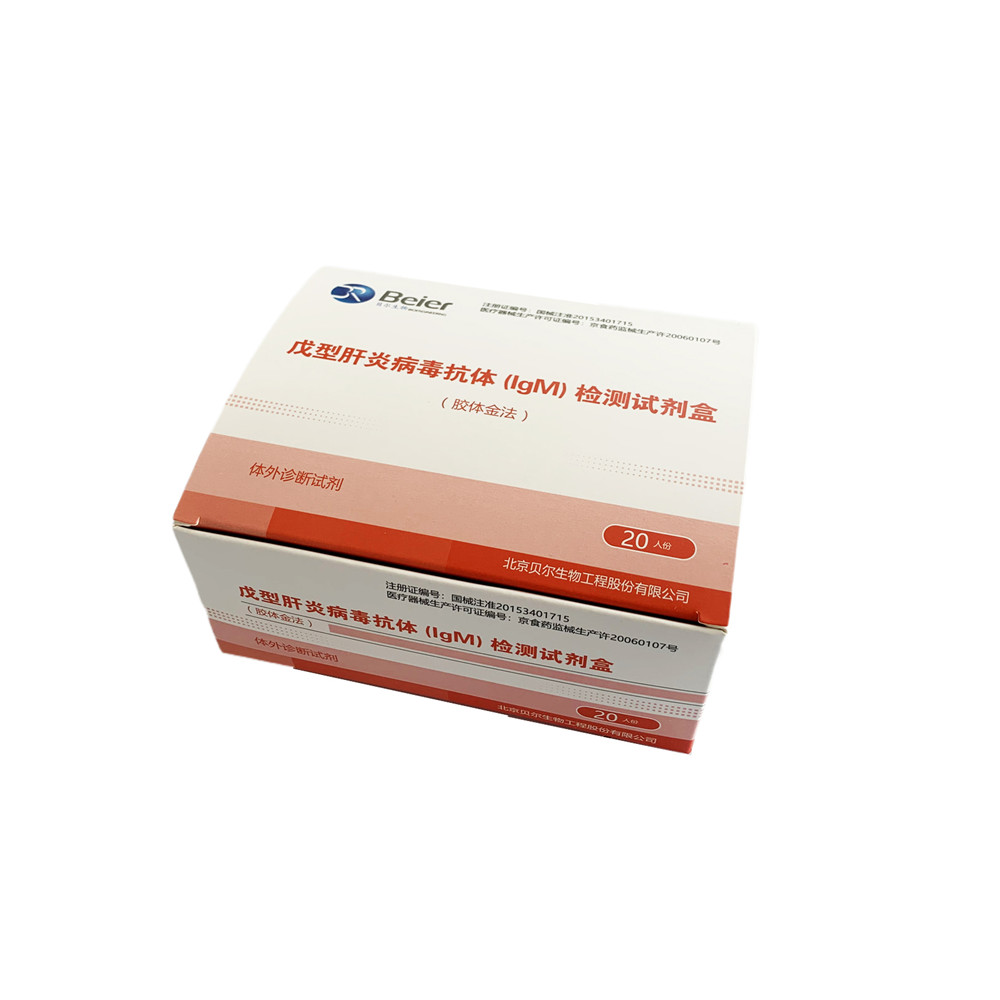
Beijing Beier Bioengineering Co., Ltd., a pioneering high-tech enterprise established in Beijing in September 1995, continues to make significant strides in the field of in vitro diagnostic reagents. Leveraging nearly three decades of expertise and innovation, the company recently introduced a breakthrough in diagnostic testing—the Particle Immunoassay. This cutting-edge technology promises to enhance diagnostic accuracy, speed, and efficiency, marking a milestone in the development and application of in vitro diagnostic solutions in China and beyond.
### A Legacy of Innovation
Since its inception, Beijing Beier Bioengineering has been committed to the advancement of diagnostic science, focusing on the research, development, and production of high-quality in vitro diagnostic reagents. The company’s dedication to scientific excellence and quality control has established it as a trusted leader in the Chinese biotechnology sector. By integrating advanced technology with rigorous clinical standards, Beijing Beier Bioengineering has supported medical institutions nationwide in disease diagnosis, treatment monitoring, and health management.
### The Particle Immunoassay: A New Horizon in Diagnostics
Particle Immunoassay represents the latest innovation from Beijing Beier Bioengineering, designed to meet the growing demand for rapid, sensitive, and reliable diagnostic tests. Unlike traditional immunoassays, this technology utilizes microscopic particles as carriers for antibodies or antigens, allowing for improved reaction kinetics and enhanced signal detection. The result is a method that can detect low concentrations of biomarkers with greater precision and in shorter timeframes.
The core advantage of Particle Immunoassay lies in its ability to significantly amplify the interaction between antigens and antibodies. The surface area provided by the particles ensures more binding sites and facilitates faster immune reactions. Consequently, diagnostic assays using this technology exhibit higher sensitivity and specificity, reducing the likelihood of false positives and false negatives—which are critical factors in clinical decision-making.
### Broad Applications in Clinical Practice
The versatility of Particle Immunoassay allows it to be applied across a wide range of diagnostic fields. From infectious diseases and autoimmune disorders to cancer markers and cardiovascular conditions, this technology enhances the detection capabilities for multiple biomarkers. For instance, in detecting viral infections, Particle Immunoassay enables quicker antigen or antibody identification, which is essential for timely treatment and epidemic control.
Moreover, the technology supports multiplex testing—simultaneously detecting several analytes in a single sample—further increasing laboratory efficiency and reducing patient discomfort. This attribute is particularly valuable in comprehensive health screenings and complex diagnostic workflows.
### Enhancing Laboratory Efficiency and Patient Outcomes
In the context of modern healthcare, the demand for rapid turnaround times without compromising accuracy is ever-increasing. By incorporating Particle Immunoassay into routine diagnostic processes, laboratories benefit from streamlined workflows and decreased assay times. This efficiency translates into faster clinical reporting, enabling physicians to make informed decisions promptly.
Patient outcomes are directly improved through earlier diagnosis and precise monitoring of disease progression or therapeutic efficacy. The enhanced sensitivity of Particle Immunoassay ensures diseases are identified at earlier stages, when interventions can be more effective. Additionally, its reproducibility and high throughput capacity make it suitable for both large hospital laboratories and point-of-care testing environments.
### Commitment to Quality and Development
Beijing Beier Bioengineering’s deployment of Particle Immunoassay technology underscores the company’s commitment to technological innovation and quality assurance. The research and production processes adhere to stringent regulatory standards, part of the company’s ongoing effort to achieve excellence and reliability in all diagnostic reagents.
The company invests heavily in scientific research, collaborating with top academic institutions and medical centers to continually refine its products. This collaborative approach ensures that Beijing Beier Bioengineering stays at the forefront of emerging trends in medical diagnostics and responds effectively to evolving healthcare needs.
### Contribution to China’s Healthcare Modernization
China’s healthcare landscape has undergone rapid modernization over the past decades, with a growing emphasis on precision medicine and advanced diagnostic techniques. Beijing Beier Bioengineering’s Particle Immunoassay technology aligns perfectly with national priorities aimed at enhancing disease prevention, diagnosis, and treatment.
By providing innovative diagnostic solutions domestically, the company supports the development of China’s biotechnology industry and reduces reliance on imported reagents. This localization effort not only strengthens national health security but also boosts the country’s competitiveness in global biotechnology markets.
### Future Prospects and Industry Impact
Looking ahead, Particle Immunoassay is poised to become a standard tool in clinical laboratories, thanks to its demonstrated benefits in sensitivity, speed, and operational ease. Beijing Beier Bioengineering plans to expand the application range of this technology, developing new assays for emerging biomarkers and integrating digital technologies for smarter diagnostic platforms.
The company’s vision extends beyond product innovation to encompass comprehensive healthcare solutions that improve patient care pathways from initial screening to therapeutic monitoring. Through continuous innovation and dedicated service, Beijing Beier Bioengineering aims to influence the broader diagnostic industry and contribute meaningfully to global health.
### Conclusion
With nearly 30 years of expertise, Beijing Beier Bioengineering Co., Ltd. continues to lead China’s biotechnology sector by introducing advanced technologies such as the Particle Immunoassay. This innovative diagnostic method enhances the accuracy, efficiency, and range of in vitro testing, reflecting the company’s enduring commitment to health innovation and quality. As China’s healthcare system evolves, Beijing Beier Bioengineering stands ready to support clinicians and patients with reliable, state-of-the-art diagnostic tools, fostering a healthier future for all.
---
**About Beijing Beier Bioengineering Co., Ltd.:**
Established in Beijing in September 1995, Beijing Beier Bioengineering Co., Ltd. is a high-tech enterprise specializing in the development and production of in vitro diagnostic reagents. The company focuses on innovation-driven growth to provide medical institutions with reliable and effective diagnostic solutions, contributing to advancements in healthcare both in China and internationally.