
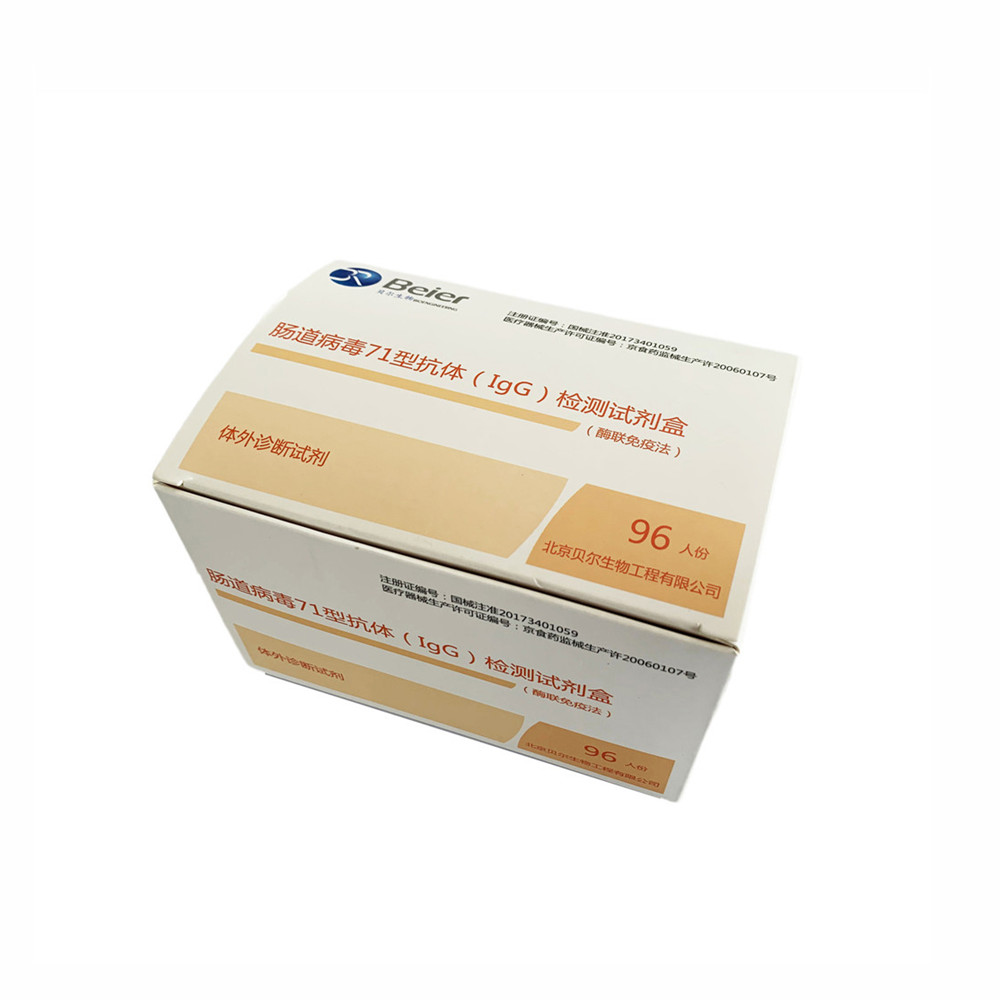
Beijing Beier Bioengineering Co., Ltd., a leading high-tech enterprise established in Beijing in September 1995, continues to make significant strides in the field of in vitro diagnostics. Renowned for its dedication to the development and production of cutting-edge diagnostic reagents, the company is now at the forefront of innovation with its adoption of Microfluidic Immunoassay technology. This advancement promises to revolutionize diagnostic testing, offering enhanced sensitivity, rapid results, and greater efficiency.
### A Legacy of Innovation in Diagnostics
Since its inception, Beijing Beier Bioengineering has been committed to advancing healthcare through technological innovation. With nearly three decades of experience, the company has built a robust portfolio of in vitro diagnostic products, catering to hospitals, laboratories, and research institutions across China and beyond. Its products have gained widespread recognition for their reliability and accuracy, contributing to better disease detection and management.
The integration of Microfluidic Immunoassay technology represents the latest milestone in the company’s pursuit of excellence. This technology harnesses the power of microfluidics—a discipline that manipulates tiny volumes of fluids through microscopic channels—to perform highly sensitive immunoassays. By miniaturizing the assay process, the technology dramatically reduces reagent consumption while enhancing the speed and precision of diagnostic tests.
### The Science Behind Microfluidic Immunoassay
Immunoassays are laboratory techniques that detect the presence or concentration of specific proteins or molecules using antibody-antigen interactions. Traditional immunoassay methods often require significant time and sample volume, which can limit their applicability in rapid diagnostics. Microfluidic Immunoassay overcomes these challenges by leveraging micro-scale fluid dynamics.
Through intricately designed microchannels, samples and reagents flow and react in a controlled environment, enabling real-time analysis with minimal waste. This controlled microenvironment accelerates binding reactions and reduces assay times from hours to minutes. Additionally, the device’s compact size facilitates point-of-care testing, potentially transforming clinical workflows.
### Advantages for Clinical and Research Applications
The adoption of Microfluidic Immunoassay technology by Beijing Beier Bioengineering offers multiple benefits across various healthcare settings:
- **Faster Results:** The miniaturized assays provide rapid diagnostic outputs, crucial for timely clinical decision-making, especially in emergency and outpatient settings.
- **Increased Sensitivity:** Enhanced assay sensitivity leads to earlier detection of diseases and more accurate monitoring of treatment efficacy.
- **Reduced Sample Volumes:** Only minimal biological samples, such as blood or saliva, are required, simplifying sample collection and improving patient comfort.
- **Cost-Effectiveness:** Lower reagent consumption and streamlined processing reduce overall operational costs, making advanced diagnostics more accessible.
- **Portability and Integration:** The compact design facilitates integration with portable diagnostic devices, promoting decentralized testing and expanding the reach of quality healthcare services.
### Empowering Healthcare with Precision Diagnostics
Incorporating Microfluidic Immunoassay into its product line reinforces Beijing Beier Bioengineering’s role as a pioneer in diagnostic innovation. The technology aligns with the company’s mission to improve patient outcomes through precise, reliable, and accessible diagnostic solutions. By enhancing assay performance and usability, the new technology supports a broad range of applications, from routine clinical screening to specialized research investigations.
Moreover, this advancement responds to the growing demand for rapid diagnostics amid increasing healthcare challenges, including infectious diseases, chronic conditions, and personalized medicine. As healthcare systems worldwide seek efficient and scalable solutions, Beijing Beier Bioengineering’s offerings are poised to make a substantial impact.
### Looking Ahead: Future Prospects and Development
Beijing Beier Bioengineering is committed to continuous research and development to refine Microfluidic Immunoassay technology further. Future directions include integrating advanced data analytics and digital platforms to enable real-time result interpretation and remote monitoring. This evolution will enhance the utility of diagnostic assays in telemedicine and smart healthcare environments.
Additionally, ongoing partnerships with academic institutions and healthcare providers aim to expand the range of detectable biomarkers, addressing emerging health threats and novel diagnostic needs. Through collaborative innovation, Beijing Beier Bioengineering seeks to maintain its competitive edge and contribute to global health advancements.
### About Beijing Beier Bioengineering Co., Ltd.
Founded in September 1995 in Beijing, Beijing Beier Bioengineering Co., Ltd. is a distinguished Chinese high-tech enterprise specializing in the development and production of in vitro diagnostic reagents. With a strong commitment to innovation, quality, and customer service, the company has become a trusted name in diagnostic solutions, supporting healthcare professionals in delivering accurate and timely patient care.
---
By integrating Microfluidic Immunoassay technology into its diagnostic repertoire, Beijing Beier Bioengineering solidifies its status as a leader in biotechnology innovation. This advancement not only enhances the capabilities of in vitro diagnostics but also exemplifies the company’s dedication to improving health outcomes through scientific excellence. As the medical landscape evolves, Beijing Beier Bioengineering remains committed to pioneering technologies that empower healthcare providers and benefit patients worldwide.