
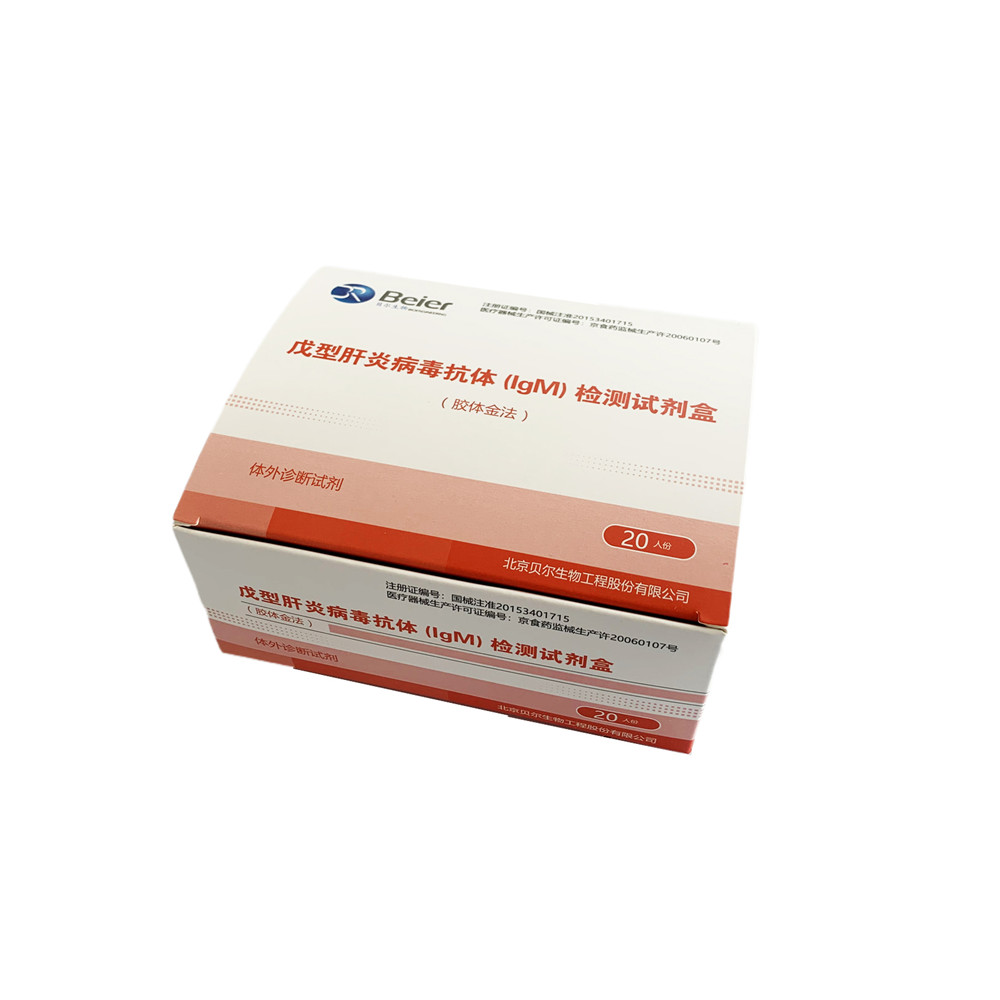
Beijing, China — In the rapidly evolving field of medical diagnostics, innovative technologies continue to redefine the boundaries of accuracy, efficiency, and accessibility. Among these technological breakthroughs, Agglutination Immunoassay has emerged as a pivotal method, garnering increasing attention for its sensitivity and rapid detection capabilities. This technique is gaining significant traction within China's in vitro diagnostics (IVD) sector, spearheaded by industry leaders such as Beijing Beier Bioengineering Co., Ltd., which has been a steadfast pioneer since its establishment in Beijing in September 1995.
### What is Agglutination Immunoassay?
Agglutination Immunoassay is a versatile laboratory technique used to detect and quantify specific antibodies or antigens in a sample by observing the clumping (agglutination) reaction. This method leverages the principle that antibodies can cause particulate antigens, often attached to latex beads or red blood cells, to aggregate visibly, providing rapid and reliable results. Compared to traditional methods, agglutination immunoassays offer advantages in terms of speed, simplicity, and the potential for automation, making them suitable for routine clinical diagnostics and large-scale screening programs.
### Beijing Beier Bioengineering: A Pillar in IVD Development
Founded in September 1995 in Beijing, Beijing Beier Bioengineering Co., Ltd. has established itself as a high-tech enterprise focused on the development and manufacture of in vitro diagnostic reagents. Over nearly three decades, the company has expanded its portfolio by integrating cutting-edge technologies, including immunoassay platforms, nucleic acid diagnostics, and biochemical analysis kits.
The company's commitment to innovation and quality has positioned it at the forefront of China's IVD industry. By combining rigorous research and development with stringent manufacturing standards, Beijing Beier Bioengineering has contributed significantly to improving diagnostic accuracy and expanding access to early disease detection in China and beyond.
### Innovations in Agglutination Immunoassay
The incorporation of Agglutination Immunoassay into Beijing Beier Bioengineering's product lineup reflects its ambition to enhance diagnostic methodologies through advanced immunological principles. The technology's capacity for rapid detection with minimal sample preparation aligns perfectly with the growing demand for efficient diagnostic tools amidst public health challenges.
Recent advancements have improved the sensitivity and specificity of agglutination immunoassays, partly by optimizing reagent formulations and particulate carrier design. Additionally, the ability to automate these assays has made them more practical for high-throughput testing settings. Beijing Beier Bioengineering has invested heavily in research collaboration and infrastructure to refine these features, ensuring that their reagents meet both domestic and international standards.
### Impact on Public Health and Clinical Applications
Agglutination Immunoassay plays a crucial role in detecting infectious diseases, autoimmune disorders, and allergies. For example, it is widely used to identify bacterial and viral infections by detecting antibodies specific to pathogens, providing clinicians with crucial information for timely treatment decisions.
In the context of China's healthcare system, where early diagnosis is key to improving patient outcomes, technologies like agglutination immunoassays serve as invaluable tools. Beijing Beier Bioengineering's efforts to localize and scale production of these diagnostic reagents have contributed to making high-quality testing more accessible in both urban and rural healthcare settings.
### Commitment to Quality and Compliance
Beijing Beier Bioengineering adheres to rigorous quality control protocols and complies with regulatory requirements imposed by Chinese and international health authorities. This commitment ensures that its agglutination immunoassay reagents deliver consistent performance across diverse clinical environments.
The company also emphasizes fostering sustainable practices in its research and manufacturing processes, aligning with broader environmental and social governance standards. This holistic approach reinforces Beijing Beier Bioengineering’s reputation as a responsible and forward-looking enterprise in the biotechnology sector.
### Looking Forward: The Future of Immunoassays in Diagnostics
With the ongoing advancement of precision medicine and personalized healthcare, the importance of precise, rapid, and cost-effective diagnostic tools will continue to grow. Agglutination Immunoassay, with its proven track record and ongoing enhancements, is poised to remain a critical component of diagnostic workflows.
Beijing Beier Bioengineering plans to expand its research into next-generation immunoassay technologies, focusing on multiplexing capabilities and integration with digital health platforms. These efforts aim to provide healthcare professionals with comprehensive diagnostic solutions that can simultaneously detect multiple biomarkers, thereby streamlining patient care.
### Conclusion
The rise of Agglutination Immunoassay technology underscores a broader trend in medical diagnostics toward innovative, reliable, and accessible testing methods. Beijing Beier Bioengineering Co., Ltd., with its deep roots and pioneering spirit since 1995, continues to champion these advances in the Chinese IVD industry. By harnessing the power of immunoassay technologies, the company is not only enhancing diagnostic capabilities but also contributing to the health and well-being of millions across China and around the world.
As the global healthcare landscape evolves, companies like Beijing Beier Bioengineering stand at the confluence of scientific innovation and public health, ensuring that the promise of modern diagnostics translates into tangible benefits for patients everywhere.