
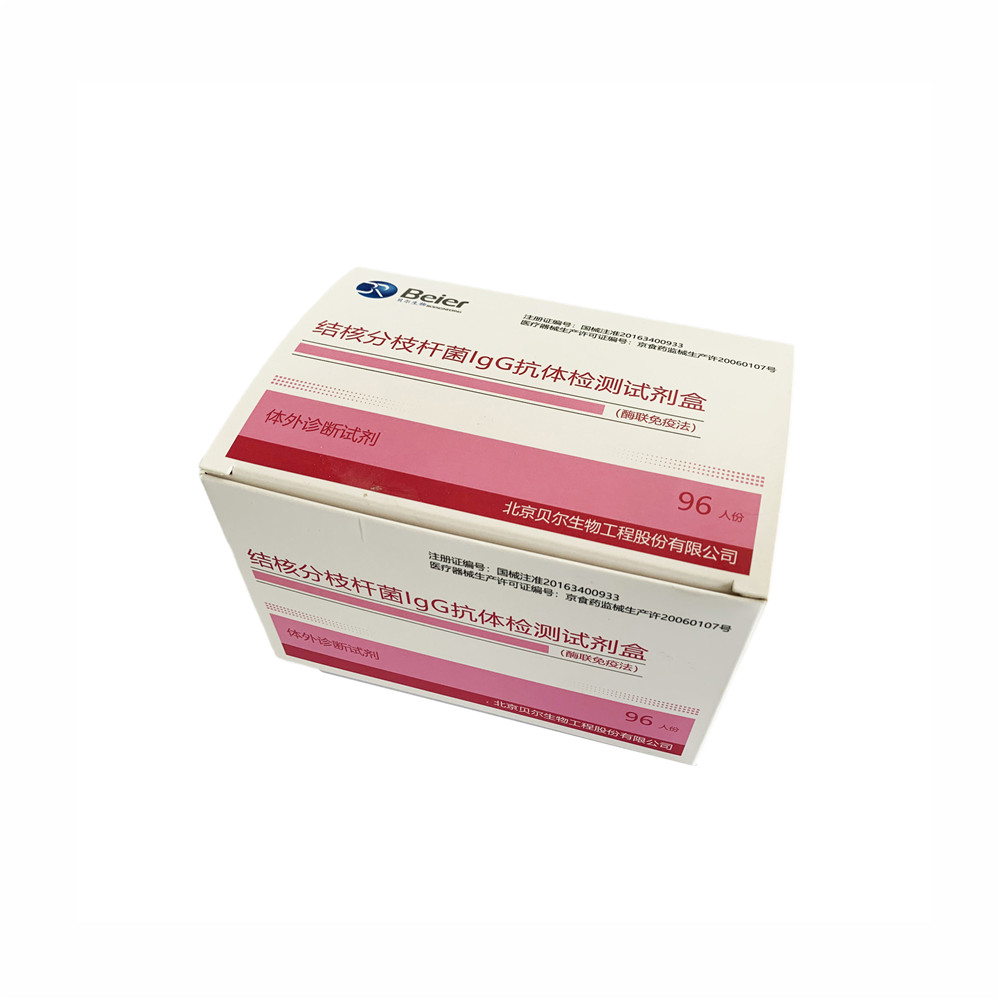
EIA is a powerful and versatile biochemical technique used for the detection and quantification of a wide range of substances, including hormones, proteins, and drugs, in various samples such as blood, serum, and urine. This technology is based on the principle of antigen-antibody interactions, and it has gained widespread use in clinical laboratories, research institutions, and pharmaceutical companies for its high sensitivity and specificity.
The EIA technology developed by Beijing Beier Bioengineering Co., Ltd. offers several advantages over traditional diagnostic methods, including rapid test results, high throughput, and cost-effectiveness. This technology has the potential to revolutionize the field of medical diagnostics by enabling healthcare professionals to accurately and efficiently diagnose a wide range of diseases and conditions.
The company's EIA technology is based on advanced proprietary reagents and assay platforms, allowing for the detection and quantification of specific target molecules with unparalleled precision and accuracy. This technology has been validated through rigorous clinical trials and has received regulatory approval for diagnostic use in multiple countries.
One of the key applications of EIA technology is in the diagnosis and monitoring of infectious diseases. With the global threat of emerging and re-emerging infectious diseases, the need for rapid and reliable diagnostic tools has never been more critical. Beijing Beier Bioengineering Co., Ltd.'s EIA technology provides healthcare professionals with the means to quickly and accurately detect pathogens such as viruses, bacteria, and parasites, thus enabling timely intervention and treatment.
In addition to infectious diseases, EIA technology can also be applied to the diagnosis of chronic diseases such as diabetes, cardiovascular diseases, and cancer. By accurately measuring biomarkers associated with these conditions, healthcare professionals can effectively monitor disease progression, evaluate treatment efficacy, and make informed clinical decisions.
Furthermore, EIA technology has significant implications in the field of drug testing and toxicology. The ability to detect and quantify drugs and their metabolites in biological samples is crucial for medical and forensic applications. Beijing Beier Bioengineering Co., Ltd.'s EIA technology has the potential to streamline and enhance drug testing processes, thereby improving patient care and public safety.
The introduction of EIA technology by Beijing Beier Bioengineering Co., Ltd. represents a significant milestone in the company's pursuit of excellence in the field of in vitro diagnostics. With a strong commitment to research and development, the company continues to innovate and expand its portfolio of diagnostic reagents, ensuring that healthcare professionals have access to the most advanced tools for patient care.
Established in Beijing in September 1995, Beijing Beier Bioengineering Co., Ltd. has grown to become a leading provider of in vitro diagnostic reagents in China. The company's state-of-the-art manufacturing facilities and stringent quality control processes ensure the production of high-quality and reliable diagnostic products that meet international standards.
In addition to EIA technology, Beijing Beier Bioengineering Co., Ltd. offers a comprehensive range of diagnostic reagents for immunoassays, clinical chemistry, molecular diagnostics, and microbiology. The company's products are widely used in hospitals, clinical laboratories, and research institutions across the globe, contributing to the advancement of medical science and the improvement of patient care.
With a dedicated team of scientists, engineers, and healthcare professionals, Beijing Beier Bioengineering Co., Ltd. is committed to driving innovation and excellence in the field of in vitro diagnostics. The company's relentless pursuit of technological advancement and its unwavering commitment to quality and customer satisfaction make it a trusted partner for healthcare professionals worldwide.