
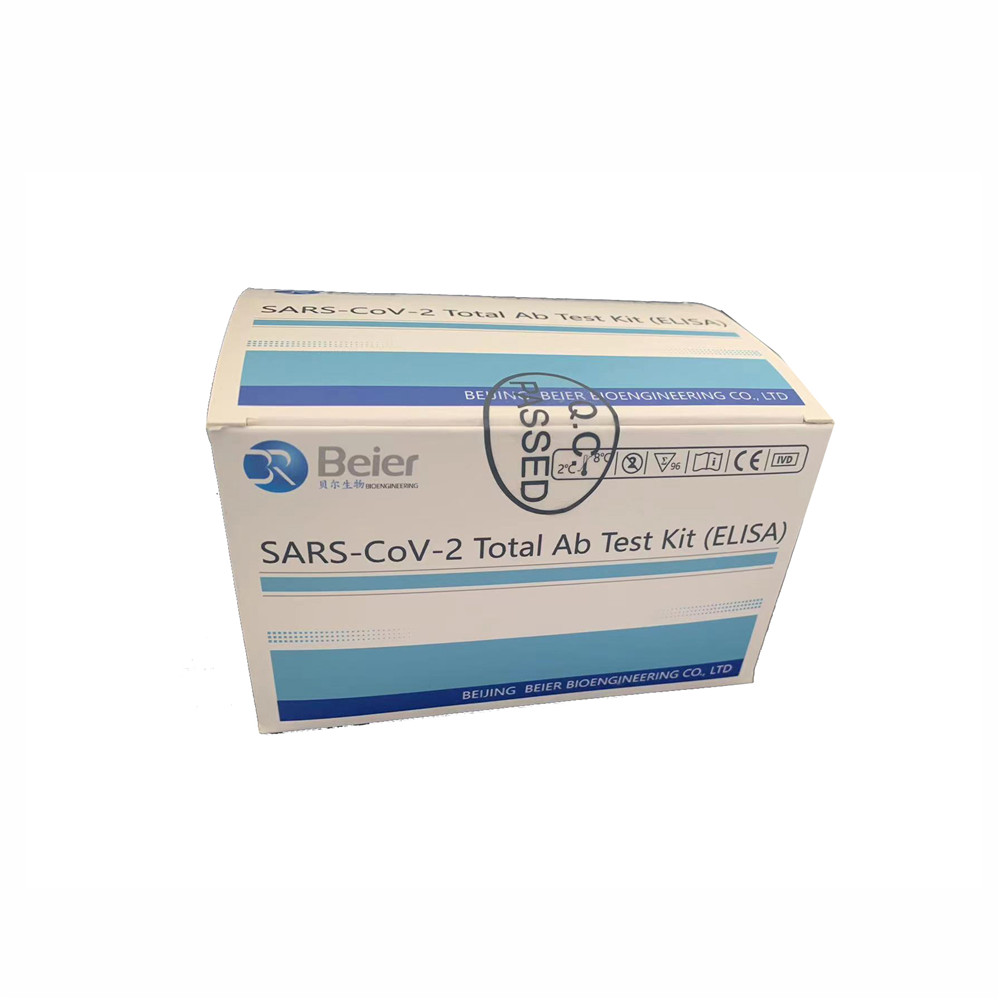
Beijing, China – Beijing Beier Bioengineering Co., Ltd., a pioneering high-tech enterprise specializing in in vitro diagnostic reagents, has made significant strides in diagnostic technology with the innovative Dot Immunoassay method. Established in September 1995 and headquartered in Beijing, the company has consistently demonstrated a commitment to advancing medical diagnostics, improving healthcare outcomes, and meeting the growing demands for rapid and accurate disease detection.
**Background of the Company**
Since its inception, Beijing Beier Bioengineering Co., Ltd. has positioned itself at the forefront of biotechnological innovation in China’s healthcare industry. With over two decades of experience in research and development, the company focuses on creating reliable, efficient, and user-friendly diagnostic reagents. Its product portfolio spans a wide range of infectious and chronic diseases, serving both domestic and international markets.
The company’s expertise lies in its ability to combine cutting-edge science with practical applications, delivering products that meet rigorous quality standards. Beijing Beier Bioengineering Co., Ltd. is recognized for its collaborative approach, working closely with medical institutions and research organizations to ensure that its diagnostic solutions address real-world clinical challenges.
**The Innovation of Dot Immunoassay**
Among its latest technological advances is the Dot Immunoassay, an innovative diagnostic technique that enhances the sensitivity and specificity of disease detection. This method utilizes antigen-antibody interactions to identify the presence of specific pathogens or biomarkers in patient samples, such as blood or serum.
Dot Immunoassay is particularly advantageous due to its simplicity and rapid turnaround time. Unlike more complex diagnostic procedures, this assay can be performed with minimal laboratory equipment, making it suitable for diverse healthcare settings, including resource-limited environments. Its design allows healthcare professionals to obtain reliable results within a shorter timeframe, facilitating prompt clinical decision-making.
The assay’s format involves immobilizing antigens or antibodies on a membrane, which then capture the target molecules from the sample. The presence of these complexes is visualized as distinct dots, providing a qualitative or semi-quantitative analysis. This straightforward readout system reduces the risk of interpretation errors and enhances the feasibility of large-scale screening programs.
**Applications and Impact**
The Dot Immunoassay technology developed by Beijing Beier Bioengineering Co., Ltd. covers a broad spectrum of diagnostic needs. It is applicable in detecting infectious diseases such as hepatitis, HIV, and tuberculosis, conditions that demand early and accurate diagnosis to prevent progression and transmission. Additionally, the assay is adaptable for autoimmune disease markers and allergy testing, showcasing its versatile utility.
By implementing the Dot Immunoassay, healthcare providers can expect improved diagnostic accuracy combined with cost-effectiveness. The reduced need for sophisticated instrumentation and trained personnel lowers barriers for widespread adoption, supporting public health initiatives, especially in rural or underserved areas.
The company’s commitment to rigorous quality control and compliance with international regulatory standards ensures that its products meet the safety and efficacy requirements demanded by global markets. This dedication not only strengthens Beijing Beier Bioengineering Co., Ltd.’s reputation but also reinforces confidence among clinicians and patients relying on these diagnostic tools.
**Future Prospects and Research**
Beijing Beier Bioengineering Co., Ltd. continues to invest heavily in research and development to refine the Dot Immunoassay technology further. Current projects include enhancing the assay’s multiplexing capabilities, enabling simultaneous detection of multiple targets within a single test. This improvement could significantly boost diagnostic efficiency and reduce healthcare costs.
Moreover, the company is exploring automation and digital integration options to facilitate data management and remote consultation, aligning with contemporary trends in telemedicine and personalized healthcare. Collaborations with academic institutions and biotech firms are underway to expand the application range of the Dot Immunoassay, including emerging infectious diseases and biomarkers related to cancer and metabolic disorders.
**Commitment to Healthcare Advancement**
The progress made by Beijing Beier Bioengineering Co., Ltd. epitomizes the vital role that innovation plays in advancing medical diagnostics. By developing accessible, accurate, and efficient diagnostic methods like the Dot Immunoassay, the company contributes meaningfully to disease prevention, timely treatment, and overall public health improvement.
As the global healthcare landscape evolves, Beijing Beier Bioengineering Co., Ltd. remains steadfast in its mission to leverage biotechnology for the betterment of human health. Its journey from a local enterprise founded in the mid-1990s to a key player in the international diagnostic industry exemplifies the dynamic potential of China’s biotech sector.
**Conclusion**
With the innovative Dot Immunoassay technology and a strong foundation in research, Beijing Beier Bioengineering Co., Ltd. is poised to continue making impactful contributions to the field of in vitro diagnostics. Its products not only respond to current healthcare challenges but also anticipate future needs, underscoring a visionary approach to diagnostics that promises enhanced patient care worldwide. The company’s dedication to quality, accessibility, and technological advancement sets a benchmark for others in the industry and offers hope for better diagnostic solutions in the years to come.