
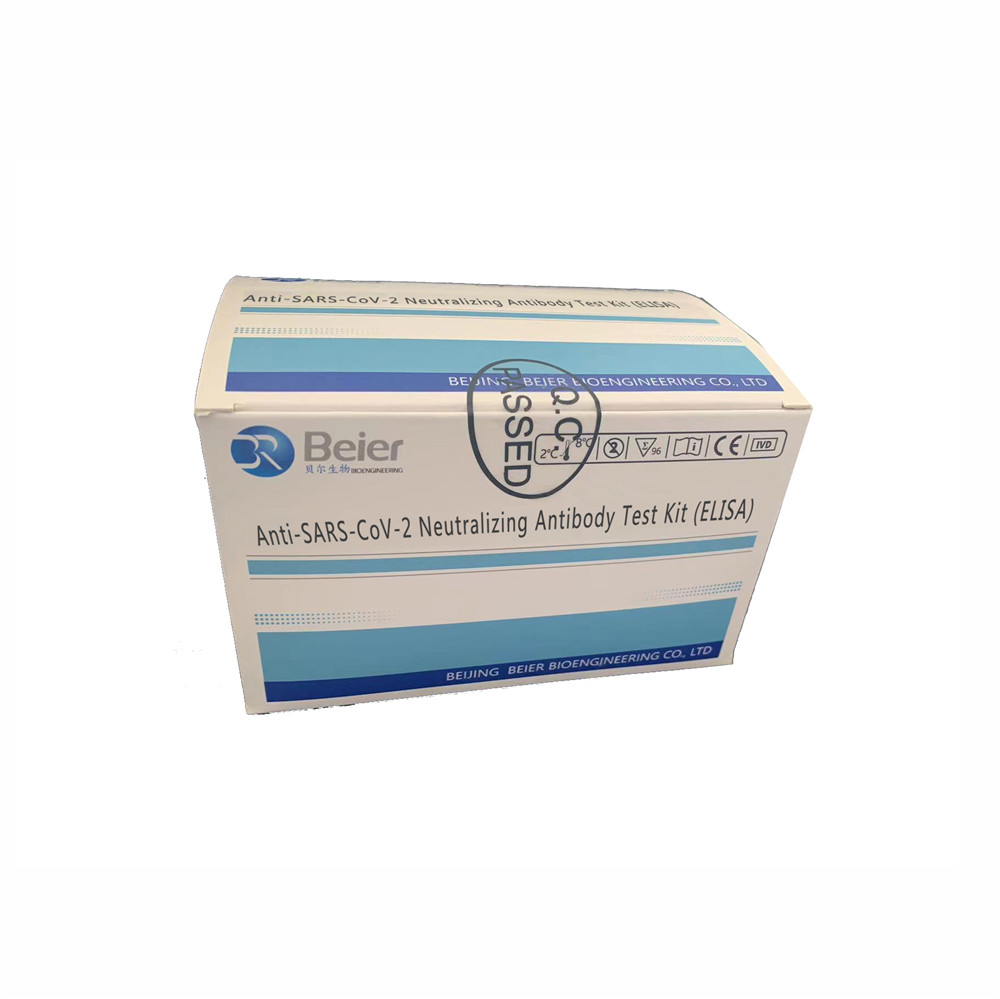
Beijing Beier Bioengineering Co., Ltd., a leading high-tech enterprise in the field of in vitro diagnostics, continues to drive innovation in medical testing with its latest advancements in agglutination immunoassay technology. Established in Beijing in September 1995, the company has built a solid reputation in China for developing and producing high-quality diagnostic reagents that enhance accuracy, efficiency, and accessibility in clinical diagnostics.
### Pioneering Diagnostic Solutions Since 1995
Founded nearly three decades ago, Beijing Beier Bioengineering Co., Ltd. has been at the forefront of the biotechnology industry in China. From its inception in 1995, the company has focused on advancing in vitro diagnostic (IVD) technologies, enabling healthcare providers to detect, monitor, and treat diseases more effectively. With a commitment to research and development, Beijing Beier has gradually expanded its product portfolio, incorporating cutting-edge technologies such as enzyme immunoassays, chemiluminescence, molecular diagnostics, and immunoassays, including the agglutination immunoassay method.
### Understanding Agglutination Immunoassay
Agglutination immunoassay is a biochemical testing method that leverages the clumping (agglutination) of particles to detect the presence of specific antigens or antibodies in a sample. It is widely used for diagnosing infectious diseases, blood typing, and biomarker detection, thanks to its simplicity, rapid turnaround time, and high sensitivity.
In this assay, microscopic particles—often latex beads—are coated with antibodies or antigens that bind selectively to the target molecule in the patient’s sample. When the target is present, it causes the particles to agglutinate, forming visible clumps. The extent of agglutination correlates with the concentration of the target substance, enabling quantitative or qualitative analysis.
This testing method is invaluable for point-of-care diagnostics and laboratory settings due to its cost-effectiveness and ease of automation, making it an ideal choice for hospitals and diagnostic centers striving for faster and more accurate results.
### Beijing Beier’s Innovations in Agglutination Immunoassay
Leveraging its rich experience and robust R&D capabilities, Beijing Beier Bioengineering has developed advanced agglutination immunoassay reagents and platforms that significantly improve diagnostic performance. The company employs proprietary technologies to enhance the stability, specificity, and sensitivity of agglutination assays, thereby reducing false positives and negatives.
These innovations are particularly impactful in infectious disease diagnostics, where timely and precise detection is critical. The improved assays aid clinicians in identifying pathogens such as bacteria and viruses swiftly, facilitating prompt treatment decisions and better patient outcomes.
Moreover, Beijing Beier has optimized the reagents for compatibility with automated analyzers, enabling high-throughput screening without compromising accuracy. This integration is essential for large-scale hospital laboratories and public health programs where efficiency and reliability are paramount.
### Driving Quality and Compliance
Quality control and regulatory compliance remain central to Beijing Beier’s operations. The company adheres strictly to international standards, such as ISO 13485 for medical devices and China’s own stringent regulatory frameworks, to ensure that every batch of reagents meets rigorous quality benchmarks.
Continuous quality assurance practices accompany its manufacturing processes, encompassing raw material inspection, process monitoring, and final product testing. This commitment ensures clinicians receive diagnostics tools they can trust for clinical decision-making.
### Expanding Market Presence and Partnerships
Thanks to its technological expertise and product quality, Beijing Beier has secured a strong market position within China’s rapidly growing in vitro diagnostics sector. The company also actively pursues collaborations with hospitals, research institutes, and international partners to foster innovation and broaden its market reach.
By investing in talent and infrastructure in Beijing, it remains well-positioned to respond to emerging healthcare challenges and evolving diagnostic needs in China and beyond.
### The Future of Diagnostics with Beijing Beier
As the global healthcare environment increasingly emphasizes precision medicine and rapid diagnostics, Beijing Beier Bioengineering’s commitment to advancing technologies like agglutination immunoassay places it at a strategic advantage. The company envisions expanding its diagnostic solutions portfolio to encompass more disease markers and integrate digital health capabilities.
With growing investments in artificial intelligence and big data analytics, future iterations of agglutination immunoassay platforms may offer even greater diagnostic insights, personalized to individual patient profiles. Beijing Beier aims to be a catalyst in this transformation, delivering tools that not only diagnose but also guide effective treatment strategies.
### Conclusion
Since its establishment in 1995, Beijing Beier Bioengineering Co., Ltd. has demonstrated unwavering dedication to enhancing in vitro diagnostic technologies. Its advances in agglutination immunoassay significantly contribute to the timely, accurate detection of diseases, ultimately improving patient care and outcomes. As it continues to innovate and expand, Beijing Beier stands as a beacon of quality and progress in China’s biotechnology sector, poised to meet the diagnostic challenges of today and tomorrow.