
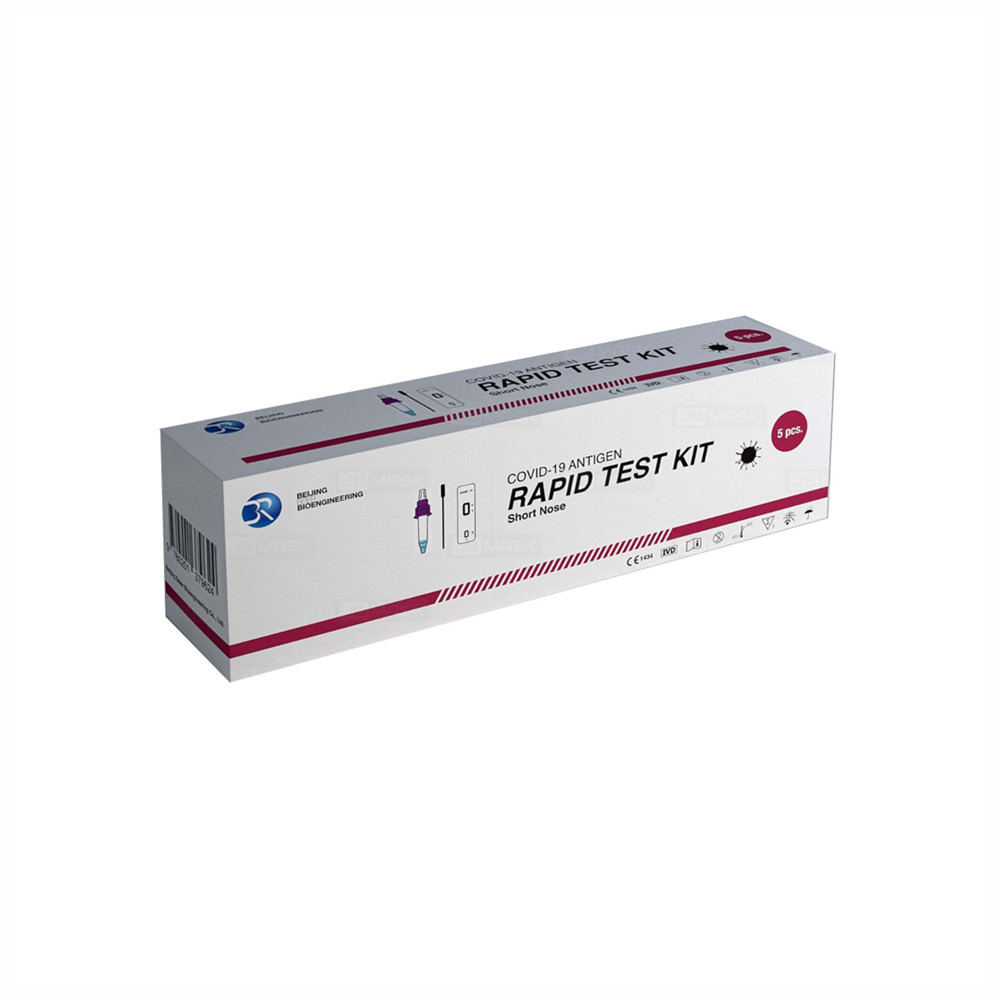
Beijing Beier Bioengineering Co., Ltd., a leading high-tech enterprise specializing in in vitro diagnostic reagents, continues to strengthen its position in the biotech industry by advancing Fluorescent Immunoassay (FIA) technology. Since its establishment in September 1995 in Beijing, the company has consistently focused on innovation and quality, cementing its reputation as a pioneer in developing cutting-edge diagnostic tools that enhance disease detection and patient care.
**A Legacy of Innovation in In Vitro Diagnostics**
Founded nearly three decades ago, Beijing Beier Bioengineering has grown from a small startup into one of China’s foremost developers and manufacturers of in vitro diagnostic (IVD) reagents. The company’s mission is to provide accurate, reliable, and user-friendly diagnostic solutions that empower clinicians and laboratories to deliver timely and precise health assessments.
With its headquarters in Beijing, the company benefits from access to a rich base of scientific expertise and collaboration opportunities with top-tier research institutions. This environment fosters continuous research and development (R&D), allowing Beijing Beier Bioengineering to stay at the forefront of diagnostic technology and use state-of-the-art methods to address unmet medical needs.
**Fluorescent Immunoassay: Enhancing Diagnostic Accuracy**
One of the flagship technologies promoted by Beijing Beier Bioengineering is Fluorescent Immunoassay (FIA). This advanced diagnostic method uses fluorescence-labeled antibodies to detect and quantify specific biomolecules in patient samples, such as blood or serum. Compared to traditional immunoassays, FIA offers higher sensitivity, specificity, and speed, making it an indispensable tool in modern clinical laboratories.
The principle behind FIA involves tagging antibodies with fluorescent markers. When these labeled antibodies bind to their target antigens, the resulting complex emits light at specific wavelengths upon excitation by a light source. The emitted fluorescence intensity correlates directly with the concentration of the analyte, allowing precise quantitative measurements.
This sensitivity improvement leads to earlier and more accurate detection of diseases, which is critical in managing conditions such as infectious diseases, autoimmune disorders, and cancers. Moreover, FIA’s capability to provide rapid results supports timely clinical decisions, enhancing patient outcomes.
**Applications Across Clinical Diagnostics**
Beijing Beier Bioengineering leverages Fluorescent Immunoassay technology across a broad panel of diagnostic tests. These encompass infectious disease screening, hormone level measurement, tumor marker detection, and allergy testing. The versatility of FIA enables laboratories to address various clinical demands with a single analytical platform, simplifying workflows and reducing operational costs.
In infectious disease diagnostics, for example, FIA enables early detection of pathogens such as viruses and bacteria through highly specific antigen-antibody reactions. This is vital during outbreaks and routine screening, where prompt and accurate identification can inform treatment and containment strategies.
Similarly, measuring hormone levels using FIA supports diagnosis and management of endocrine disorders. The assay’s precision facilitates monitoring of thyroid hormones, reproductive hormones, and other critical biomarkers, delivering actionable insights for personalized therapy.
Cancer diagnostics also benefit from the sensitivity of FIA, which detects tumor markers at low concentrations before clinical symptoms become apparent. This early warning capability enhances prognosis by allowing interventions at treatable stages.
**Commitment to Quality and Compliance**
Beijing Beier Bioengineering adheres to stringent quality standards throughout the entire product lifecycle — from R&D and manufacturing to distribution and customer support. The company implements comprehensive quality management systems aligned with international regulatory requirements, including ISO certifications and national medical device regulations.
By maintaining these high standards, Beijing Beier Bioengineering ensures that its Fluorescent Immunoassay products are reliable, reproducible, and safe for clinical use. The company’s quality assurance processes involve rigorous validation, stability testing, and lot-to-lot consistency checks to meet clinical laboratory expectations.
**Strategic Growth and Future Prospects**
Looking forward, Beijing Beier Bioengineering plans to expand its FIA portfolio by integrating novel biomarkers and developing multiplex assays capable of simultaneous detection of multiple analytes. The company is also exploring automation and digitalization technologies to enhance ease of use and data management in clinical settings.
In addition, Beijing Beier Bioengineering aims to broaden its global footprint by entering new international markets and forging partnerships with healthcare providers worldwide. This strategic growth aligns with its vision to contribute significantly to global health through accessible and advanced diagnostic solutions.
**Conclusion**
Founded in 1995, Beijing Beier Bioengineering Co., Ltd. has established itself as a vibrant high-tech enterprise at the forefront of in vitro diagnostic reagent development in China. Through its commitment to innovation and quality, the company is driving progress in clinical diagnostics with Fluorescent Immunoassay technology — a powerful tool that enhances the sensitivity, accuracy, and speed of laboratory testing.
By continuously evolving its product offerings and adhering to rigorous quality standards, Beijing Beier Bioengineering is well-positioned to meet the growing demands of modern healthcare. Its advancements in diagnostic technology promise to play a key role in early disease detection, personalized medicine, and improved patient outcomes both domestically and internationally.