
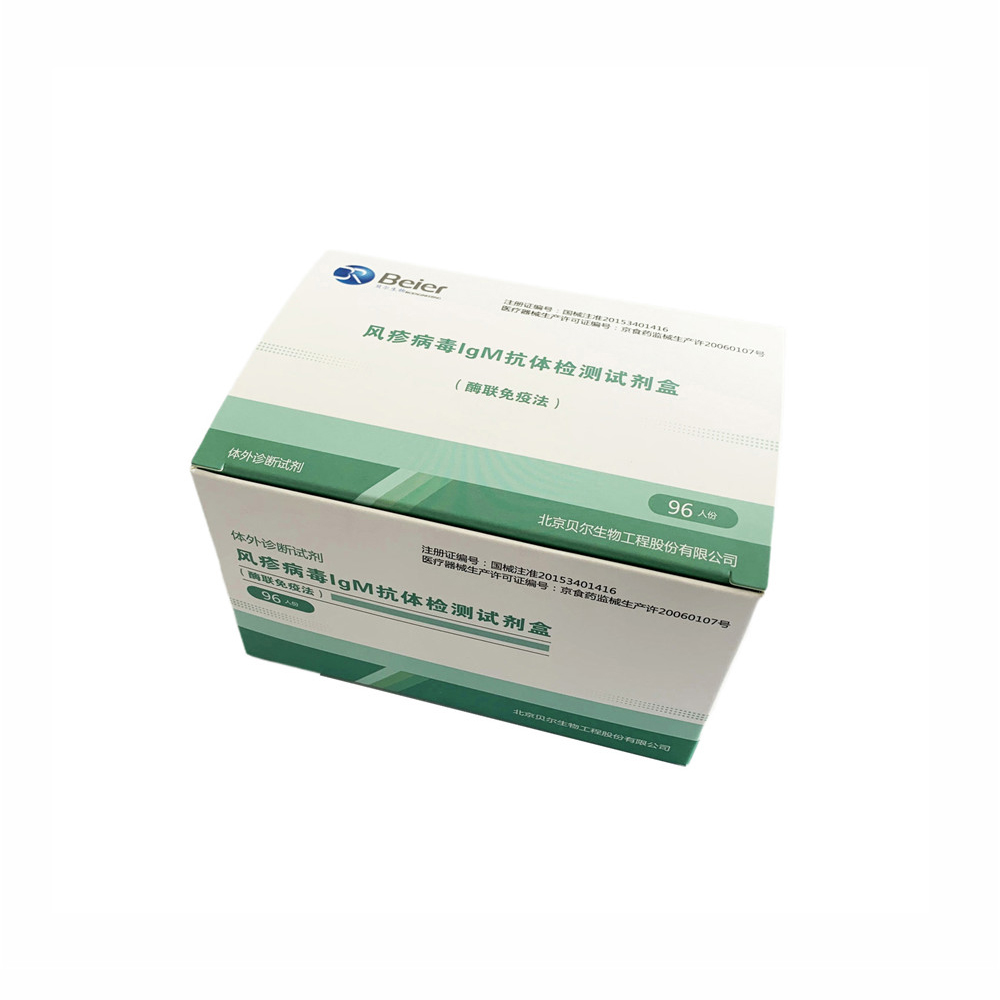
Beijing Beier Bioengineering Co., Ltd., a leading high-tech enterprise specializing in in vitro diagnostic reagents, has recently introduced an innovative rapid test kit designed to enhance diagnostic efficiency and accuracy. Established in Beijing in September 1995, the company has built a strong reputation over nearly three decades for developing cutting-edge diagnostic solutions tailored to meet the evolving demands of healthcare providers and laboratories across China and beyond.
### Company Background and Expertise
Founded in Beijing, Beijing Beier Bioengineering Co., Ltd. has grown from a pioneering startup into a major player in the field of in vitro diagnostics (IVD). The company focuses on the research, development, and production of reagent kits that support clinical diagnosis, disease monitoring, and health management. With a commitment to technological innovation and quality assurance, Beier Bioengineering has continuously expanded its product range to cover a broad spectrum of clinical applications, including infectious disease detection, biochemical analysis, and immunological assays.
The company’s state-of-the-art research and manufacturing facilities are equipped with advanced technology platforms and staffed by multidisciplinary teams of experts dedicated to driving product innovation. This dedication to quality and performance is reflected in Beier Bioengineering’s strong market presence and the trust it has earned from healthcare institutions nationwide.
### The New Rapid Test Kit: Enhancing Diagnostic Efficiency
In response to the growing need for fast, accurate, and easy-to-use diagnostic tools, Beijing Beier Bioengineering Co., Ltd. recently launched a rapid test kit designed for quick detection of specific biomarkers related to infectious diseases. This new test kit embodies the company’s mission to provide practical diagnostic solutions that streamline clinical workflows and improve patient outcomes.
The test kit stands out for its rapid turnaround time, delivering reliable results within minutes without the need for complex laboratory infrastructure. This attribute makes it especially valuable in point-of-care settings such as clinics, emergency departments, and field hospitals, where timely diagnosis is critical for patient management and infection control.
### Key Features and Benefits
- **Speed and Simplicity:** The test kit is designed for rapid processing, enabling healthcare professionals to obtain diagnostic information swiftly. Its user-friendly format requires minimal training and no specialized equipment, facilitating deployment in a variety of healthcare environments.
- **High Sensitivity and Specificity:** Leveraging advanced immunoassay technology, the kit achieves high accuracy rates, reducing the likelihood of false positives or negatives. This precision supports clinicians in making informed decisions about treatment and isolation measures.
- **Portability:** The compact and stable design of the test kit ensures ease of transport and storage, which is advantageous for remote or resource-limited areas where traditional laboratory access is limited.
- **Cost-Effectiveness:** By lowering the dependency on elaborate testing infrastructure, the rapid test kit offers a budget-friendly alternative for routine screening and surveillance programs, aiding public health initiatives.
### Impact on Healthcare and Public Health
The introduction of this rapid test kit aligns with Beijing Beier Bioengineering Co., Ltd.’s broader goal of strengthening diagnostic capabilities at all levels of healthcare. Efficient and early detection of infectious diseases is crucial in controlling outbreaks, initiating timely treatment, and reducing transmission risk. Tools like this significantly enhance the capacity of medical personnel to respond swiftly to health threats.
Moreover, the test kit supports the growing emphasis on decentralized testing models, allowing for diagnostic activities outside of centralized laboratories. This decentralization improves accessibility to testing services, particularly in rural or underserved regions, thereby contributing to more equitable healthcare delivery.
### Commitment to Quality and Innovation
Quality assurance has always been a cornerstone of Beijing Beier Bioengineering’s operational philosophy. The company adheres strictly to national and international standards for diagnostic reagent production, ensuring that every batch of its test kits meets rigorous performance criteria. Continuous quality control and validation processes are integrated throughout the product lifecycle, from research and development to final distribution.
In addition to this new product, Beier Bioengineering invests heavily in research and development to stay ahead in the rapidly evolving landscape of diagnostic technology. Strategic collaborations with academic institutions and industry partners further enhance its innovation capabilities, fostering the creation of next-generation diagnostic solutions.
### Future Prospects
Looking ahead, Beijing Beier Bioengineering Co., Ltd. aims to expand the application fields of its rapid diagnostic technologies and explore integration with digital health platforms. Enhancing connectivity and data management in diagnostic workflows promises improved real-time disease monitoring and epidemiological tracking, aligning well with modern healthcare trends.
The company is also exploring opportunities for international cooperation to bring its products to global markets, contributing to worldwide efforts in disease control and health promotion.
### Conclusion
With nearly 30 years of dedication to the development of in vitro diagnostic reagents, Beijing Beier Bioengineering Co., Ltd. continues to lead innovation in the field. The newly introduced rapid test kit exemplifies the company’s capability to respond promptly to the needs of the healthcare sector by delivering accurate, fast, and reliable diagnostic solutions. This advancement not only supports frontline medical professionals but also reinforces public health infrastructure, underscoring Beijing Beier Bioengineering’s role as a key contributor to improving health outcomes in China and beyond.