
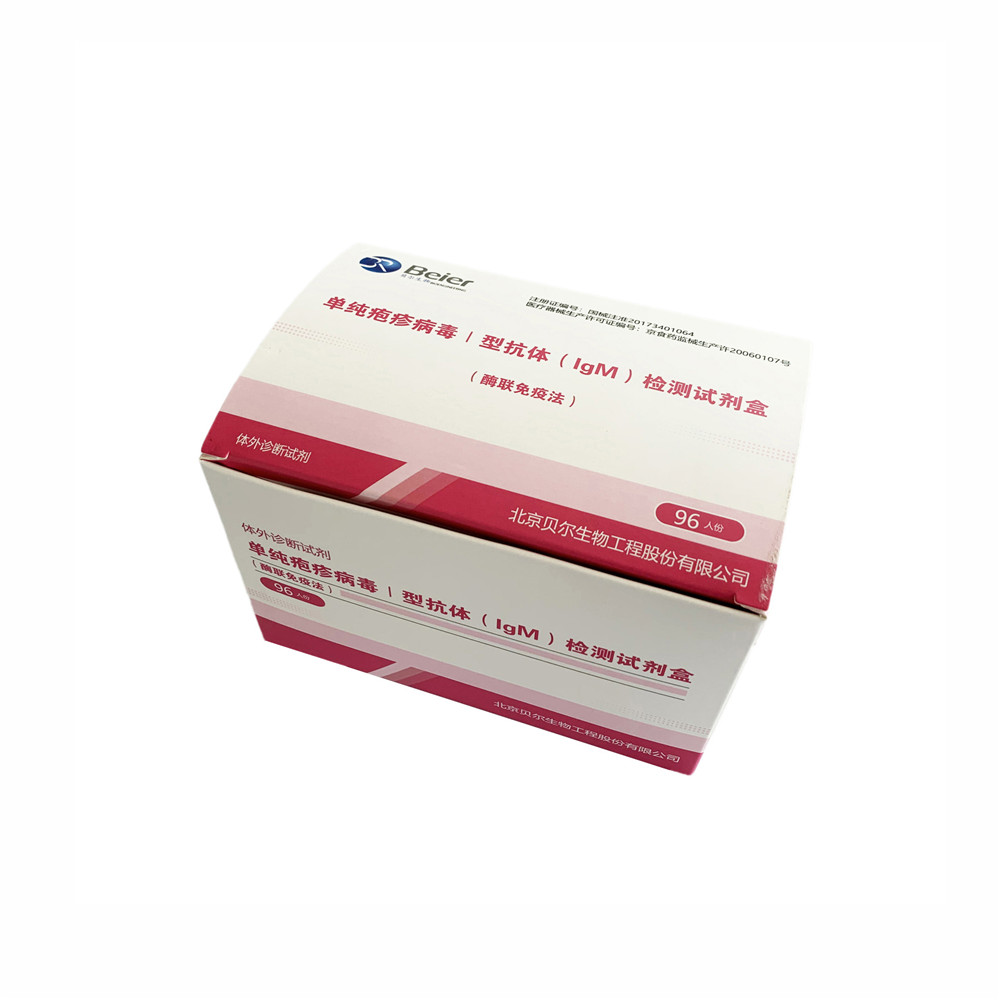
Beijing Beier Bioengineering Co., Ltd., a leading high-tech enterprise in China specializing in in vitro diagnostic reagents, continues to make significant strides in diagnostic technologies. Established in Beijing in September 1995, the company has committed nearly three decades to innovation and excellence in the development and production of reagents that support the global healthcare industry. One of the company's recent advancements is the enhancement and application of capture enzyme immunoassay (EIA) techniques, which offer improved sensitivity and specificity in detecting a variety of biomarkers critical for disease diagnosis and management.
### The Role of Capture Enzyme Immunoassay in Diagnostics
Capture enzyme immunoassay, a widely used immunoassay technique, utilizes antibodies to effectively capture target antigens from a sample, followed by detection through an enzyme-mediated colorimetric, chemiluminescent, or fluorescent reaction. This method has become instrumental in numerous clinical and research applications, including infectious disease testing, hormone level measurement, and detection of tumor markers.
The main advantage of the capture EIA approach lies in its ability to provide enhanced specificity. By employing an antibody “capture” step, the assay reduces interference from non-specific proteins, resulting in more accurate and reliable test results. Additionally, the enzymatic amplification of the signal allows for the detection of low concentrations of analytes, crucial for early diagnosis and therapeutic monitoring.
### Beijing Beier Bioengineering’s Commitment to Innovation
Since its inception in 1995, Beijing Beier Bioengineering Co., Ltd. has focused on advancing diagnostic reagent technologies to meet the evolving needs of modern healthcare. The company’s dedication to research and development has led to a diverse portfolio of in vitro diagnostic products that cater to both clinical and laboratory applications.
The optimization of capture enzyme immunoassay protocols is part of the company’s broader strategy to enhance the precision and throughput of diagnostic testing. Leveraging advanced biochemical engineering, Beijing Beier Bioengineering has refined antibody production, enzyme labeling techniques, and substrate formulations to improve assay performance. These improvements translate into higher sensitivity, faster turnaround times, and better reproducibility in clinical test results.
### Expanding Accessibility and Improving Patient Outcomes
With the global rise in chronic diseases and infectious conditions, the demand for reliable, fast, and cost-effective diagnostic methods has never been greater. Capture enzyme immunoassay satisfies these needs by allowing healthcare providers to detect disease markers with accuracy and efficiency. Beijing Beier Bioengineering’s products support laboratories worldwide by delivering high-quality diagnostic reagents that are easy to integrate into existing testing platforms.
Moreover, the company’s commitment to quality management ensures that all diagnostic reagents meet stringent regulatory standards. This commitment is critical in maintaining the trust of healthcare professionals and patients alike, particularly in environments where diagnostic accuracy directly influences treatment decisions.
### Research and Collaboration
In addition to its manufacturing prowess, Beijing Beier Bioengineering actively collaborates with academic institutions, hospitals, and international partners. These collaborations foster innovation through shared expertise, clinical validations, and technology transfers. The company’s focus on capture enzyme immunoassay technology is often complemented by integration with automated platforms and digital data analysis tools, positioning it at the forefront of next-generation diagnostics.
Recent research initiatives have explored novel antibody engineering to improve capture efficiency and reduce cross-reactivity. Concurrently, the development of new enzyme-substrate pairs aims at increasing the stability and intensity of detection signals. These advancements promise to expand the utility of capture EIA beyond traditional applications into emerging fields such as personalized medicine and point-of-care testing.
### Future Prospects and Industry Impact
Looking ahead, Beijing Beier Bioengineering plans to expand its global reach by further enhancing the performance of in vitro diagnostic reagents, including capture enzyme immunoassays. The company envisions a future where rapid, accurate diagnostic testing is accessible to all patient populations, regardless of geographical or economic barriers.
Furthermore, the continuous refinement of capture EIA methods aligns with the broader industry trends toward multiplexed testing and integration with artificial intelligence for improved diagnostic insight. As healthcare systems increasingly rely on precision diagnostics to guide personalized treatment plans, companies like Beijing Beier Bioengineering play a critical role in enabling this transformation.
### Conclusion
Beijing Beier Bioengineering Co., Ltd.’s advancements in capture enzyme immunoassay technology underscore its ongoing commitment to innovation in the field of in vitro diagnostics. Since its establishment in 1995, the company has grown into a cornerstone of China’s biotech industry, providing cutting-edge diagnostic reagents that improve clinical outcomes and support the global fight against disease.
As capture enzyme immunoassay continues to be a vital tool in clinical diagnosis, Beijing Beier Bioengineering’s expertise and forward-looking approach ensure that healthcare providers have access to reliable, high-performance testing solutions. Through persistent research, development, and collaboration, the company remains dedicated to enhancing global health by empowering accurate and timely disease diagnosis.