
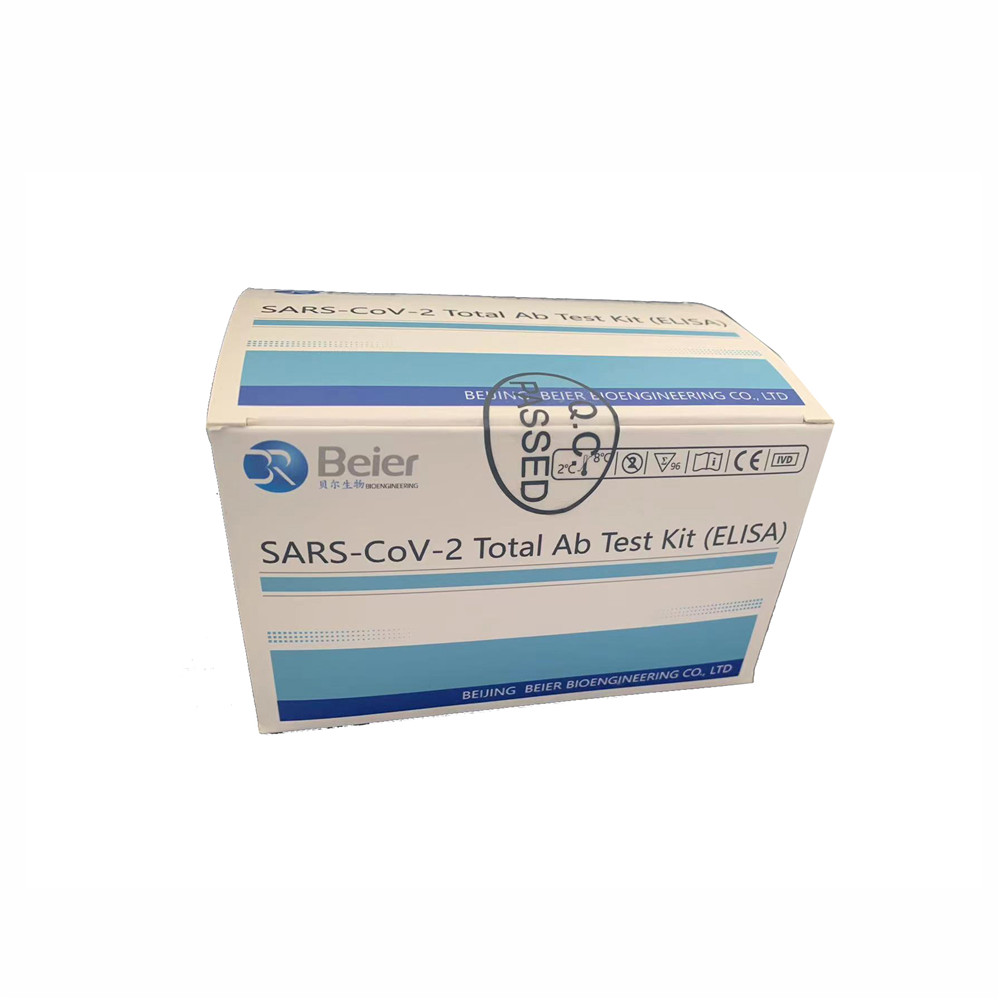
Beijing Beier Bioengineering Co., Ltd., a pioneering high-tech enterprise established in Beijing in September 1995, has been making significant strides in the field of in vitro diagnostic reagents. With nearly three decades of experience in biotechnology innovation and production, the company is at the forefront of providing cutting-edge diagnostic tools essential for detecting infectious diseases, including those caused by Treponema pallidum, the bacterium responsible for syphilis.
### Background on Beijing Beier Bioengineering Co., Ltd.
Founded with a commitment to advancing healthcare diagnostics, Beijing Beier Bioengineering Co., Ltd. has grown steadily to become a key player in China's biotechnology sector. The company specializes in the research, development, and manufacture of a broad range of in vitro diagnostic reagents and kits, which are widely used in clinical laboratories, hospitals, and disease control centers nationwide.
Over the years, Beijing Beier Bioengineering has established itself as a reliable provider of highly sensitive and specific diagnostic products. Its portfolio includes reagents for the detection of various infectious agents, autoimmune conditions, and metabolic disorders. The integration of advanced technologies and rigorous quality control systems has enabled the company to maintain high standards while meeting the evolving demands of the healthcare industry.
### Importance of Detecting Treponema pallidum
Treponema pallidum is a spirochete bacterium responsible for syphilis, a chronic infectious disease with significant public health implications worldwide. Early and accurate detection of this pathogen is critical for effective treatment and prevention of complications such as neurological disorders, cardiovascular damage, and congenital syphilis.
Syphilis can present in various stages, each with unique clinical manifestations, which makes laboratory diagnosis essential. Traditional diagnostic methods, including dark-field microscopy and serological tests, have been complemented and increasingly replaced by in vitro reagents that offer improved sensitivity, specificity, and ease of use.
### Beijing Beier Bioengineering’s Contribution to Treponema pallidum Diagnostics
Responding to the pressing need for reliable diagnostic solutions for syphilis, Beijing Beier Bioengineering has developed and refined a series of diagnostic reagents targeting Treponema pallidum. These reagents play a vital role in identifying antibodies produced in response to the bacterium, enabling clinicians to diagnose the infection more effectively.
Leveraging advanced immunoassay technologies, the company's diagnostic kits are designed to detect both treponemal and non-treponemal antibodies, facilitating differential diagnosis and monitoring of disease progression or treatment efficacy. The availability of such high-performance reagents supports public health efforts aimed at controlling and reducing the burden of syphilis.
### Innovation and Quality Assurance
Beijing Beier Bioengineering’s commitment to research and development is evident in its continuous innovation pipeline. Collaborating with academic institutions and healthcare organizations, the company invests heavily in improving assay sensitivity, reducing turnaround times, and enhancing reagent stability.
Moreover, quality assurance measures are deeply embedded in every phase of production. The company adheres to stringent international standards, such as ISO 13485 and Good Manufacturing Practices (GMP), to ensure that each diagnostic reagent batch delivers consistent and reliable results. This unwavering dedication to quality has garnered trust from healthcare providers and regulatory authorities alike.
### Market Impact and Future Outlook
The demand for effective diagnostic reagents, especially in infectious disease detection, continues to rise globally. Within this context, Beijing Beier Bioengineering stands well-positioned to expand its market presence both domestically and internationally. Its specialized products for Treponema pallidum diagnostics not only contribute to healthcare improvement in China but also hold potential significance in regions grappling with high syphilis prevalence.
Looking ahead, Beijing Beier Bioengineering plans to enhance its product portfolio further by integrating molecular diagnostic techniques and digital health solutions. These advancements aim to provide more comprehensive diagnostic platforms that enable quicker detection, improved accuracy, and linkage to treatment.
### Conclusion
As syphilis remains a major public health challenge, the role of reliable diagnostic tools cannot be overstated. Beijing Beier Bioengineering Co., Ltd., with its extensive expertise and robust product lineup, is making valuable contributions to this field. By developing advanced in vitro reagents for the detection of Treponema pallidum, the company reinforces its mission to support healthcare professionals in delivering timely and effective diagnosis.
Established in 1995 and dedicated to innovation and quality, Beijing Beier Bioengineering continues to be a driving force behind enhancing disease detection capabilities. Its work not only helps in disease management but also ultimately improves patient outcomes, underlining the crucial intersection of biotechnology and public health.